




An effective transport system was important to the success of the industrial growth of the Isle of Dogs.
When the island foreshore was developed, part of its attraction was that the new industrialists were able to make use of the existing waterways.
The Thames was a highway in itself, and from Limehouse, the Regent’s Canal gave access to the national canal networks, developed in the 18th century and providing faster and more reliable inland communications than the roads, many of which were in poor repair.
In the 19th century, riverside wharves were extended or created all around the island from Limehouse to Blackwall to accommodate the increasing traffic in barges and lighters.
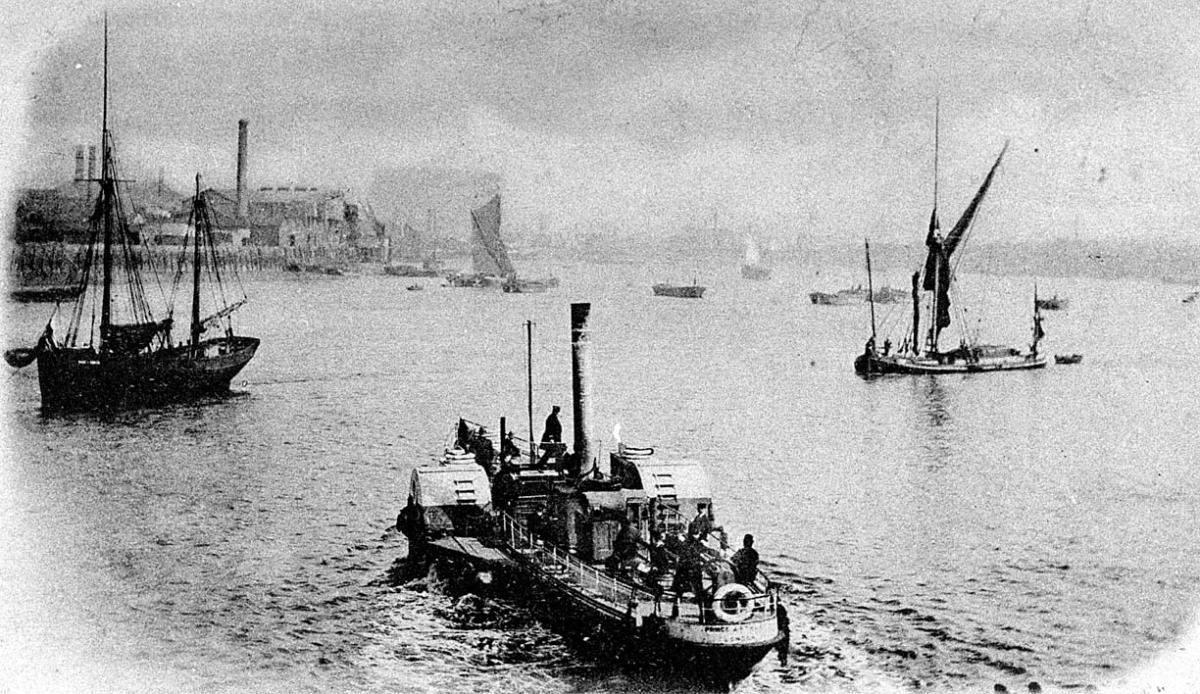
A ferry service between Millwall and Greenwich had operated for at least 400 years, first of all from Potter's Ferry slipway, close by the present-day Ferry House pub.
A number of Greenwich watermen had the exclusive right to operate this ferry.

In 1812, a new ferry company was set up with the right to carry goods, animals and vehicles, while Greenwich watermen kept their privilege to carry foot passengers.
In 1850, work was carried out by Pontifex and Wood (later Associated Lead) to form an embankment 550 feet in length at their riverside factory in West Ferry Road.
In the 1860s, the firm was again given permission by the Thames Conservancy Board to carry out improvements to "make the shore safe for barges".
This was typical of many similar operations, and in this way the island was gradually ringed by wharves.
As goods traffic increased, so did passenger ferry services up and down and across the river.
Benjamin H Cowper in A Descriptive Historical and Statistical Account of Millwall (1853) records the ferry plying places along Millwall.
These were at Regent Wharf, Torrington Arms, Kings Arms, Tindall’s Dock and Ferry Street.
The latter was the old-established Potter’s Ferry and all the others had come into being as industry spread along the embankment.
Cowper noted that: "There was a Ferry called Willow Bridge Ferry, near Messrs Ferguson’s Works, but this was obsolete."
This may have been Deptford Ferry, used by diarist Samuel Pepys, and if so it is hard to believe it had fallen out of use.
In the heyday of island ship-building, communications were frequent between the engineering works, anchor-smiths, mast makers, etc., of Millwall, and the Royal Naval yards at Deptford.
- Debbie Levett is officer trustee for the Friends of Island History Trust (islandhistory.co.uk).


Share