


Andy Burnham has urged Ukraine’s allies to send more interceptor missiles to Kyiv as Ukraine struggles under continued Russian bombardment.
Chairing his first meeting of the so-called “coalition of the willing”, the Prime Minister said the group was doing “everything we can” to “dig into our own stocks and help others dig into their stocks”.
Ukrainian President Volodymyr Zelensky has repeatedly pleaded for more US-made Patriot interceptor missiles in recent months as Kyiv’s stocks have diminished.
Supplies of Patriots have been diverted to the Middle East since the outbreak of war with Iran, with Ukraine receiving significantly fewer missiles this year than in previous years.
Speaking later on Monday, Mr Zelensky welcomed the talks between the coalition of the willing but said “now, we have to deal with a funding gap”, including the option of bringing forward part of the European loan to Ukraine, or unlocking frozen Russian assets.
“The total gap is 27 billion,” he said in a post on X.
“One of the main options is to bring forward part of the European loan funding this year. But we should not give up on other ideas for how to ensure fair protection in this war – a war that Russia started and continues to prolong.”
Russia has sought to capitalise on the shortage by stepping up its ballistic missile strikes, killing at least 23 people and wounding more than 100 in the past three days alone.
At a meeting of the coalition of the willing in Kyiv on Monday, Mr Burnham said the group was “working with our allies outside of this coalition” to resolve the issue, arguing Ukraine “needs more help to protect its people right now”.
He also called on the US to “ratchet up” economic pressure on Russia, arguing Moscow’s economy was struggling under a record budget deficit and declining oil revenues and urging American legislators to impose further sanctions.
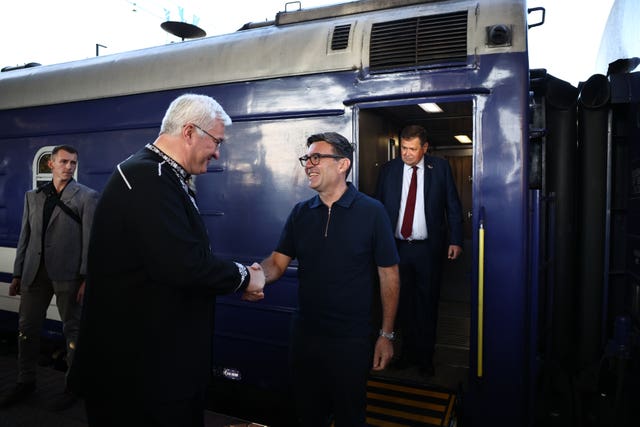
While Mr Burnham called for more supplies of interceptor missiles to Ukraine, he has used his visit to Kyiv – his first foreign trip as Prime Minister – to announce more British support for the country’s long-range weapons.
The UK has agreed to declassify blueprints for British-made components for the Scalp missile, a French-produced version of the Storm Shadow that has already been used to hit targets in Russia.
That decision has drawn strong condemnation from Russia, with Vladimir Putin’s spokesman Dmitry Peskov saying it would add “fuel to the fire” of the conflict.
But Mr Burnham hit back in comments to reporters in Kyiv, saying: “Who started the fire? That’s the question, isn’t it.”
Opening the “coalition of the willing” meeting, he said: “I have only been in office a short time but already in that time Russia has threatened the UK for its support for the Ukraine, and I know other countries here have faced similar threats.
“It just shows that what we are doing is having an impact, and we should stand firm together.”
Mr Burnham also paid tribute to his predecessor Sir Keir Starmer, saying he was “proud” of his work and will “pick up… where Keir left off”.
In a joint statement following the meeting, he and co-chairs French President Emmanuel Macron and German Chancellor Friedrich Merz said the group would aim to strengthen Kyiv’s air defences “as a matter of urgent priority”.
They condemned Moscow’s “systematic and escalating strikes against Ukraine’s cities, critical infrastructure and civilians” and pledged to continue efforts to “constrain Russia’s war chest” through sanctions and actions against the “shadow fleet”.
The statement said the leaders “expressed their determination to increase military support to Ukraine, strengthen its air defence as a matter of urgent priority, enhance co-operation with its defence industry, and share relevant technologies, including through the anti-ballistic missile coalition”.
The Prime Minister also pledged “continuity” in the UK’s approach to Ukraine, saying “we’re not a fair-weather friend, we’re here for the long haul”.
“Obviously, with a change of prime minister, presumably people might think is there a change of policy – well, I’m here to say there isn’t,” he told ITV News.
Asked if he would urge others, including the US, to go further in their support, he told LBC: “Well, we need to go further together, I think, because there are some urgent problems that Ukraine is facing.
“There is an urgent need for air defence support. So, anti-ballistic missile support, and that’s the big takeaway, if you like, from the meeting today.
“There’s also a need for financial support. So, we will do whatever we can to convene people to share that burden together, and we’ll continue to provide steadfast support.”
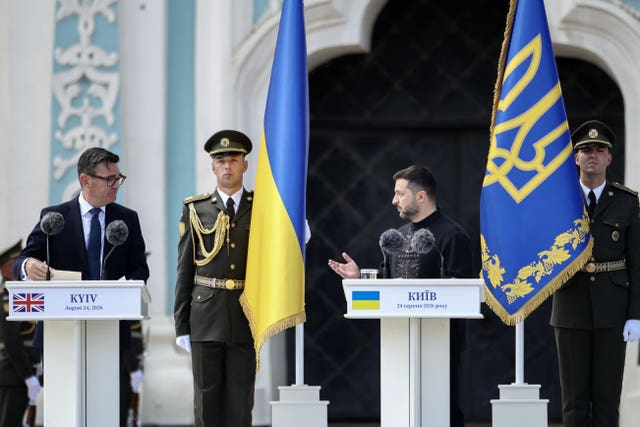
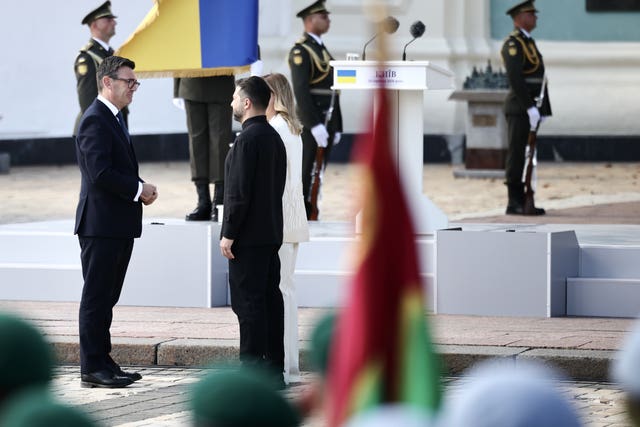
Earlier, Mr Burnham had used a speech outside Kyiv’s St Sophia cathedral to promise that the UK would not be deterred from supporting Ukraine.
He told an event marking the 35th anniversary of the country’s independence from the Soviet Union: “Despite Russia’s outrageous threats to my country, we will continue our support for Ukraine.”
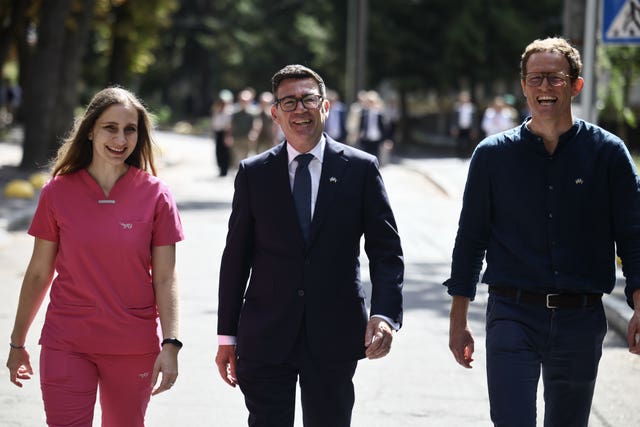
He also praised the “sheer strength” of the Ukrainian people and described their country as “Europe’s protector, not a drain on our security but the front line in keeping Europe safe”.
Mr Burnham went on to compare Ukraine’s resistance to Russia to the UK’s fight with Nazi Germany, saying: “My nation kept the flame of European freedom alive in the 20th century, you hold that flame in the 21st.”
He travelled to Kyiv earlier on Monday, making his first foreign trip since becoming Prime Minister in July in an effort to underline the UK’s support for Ukraine.
During Monday’s event in Kyiv, Ukrainian President Volodymyr Zelensky presented Mr Burnham with an award recognising the UK’s support.
In his own independence day speech, Mr Zelensky said Ukraine would “not submit” to Russia, saying: “Ukrainians will not be cobblestones under the feet of tsars and rulers.”
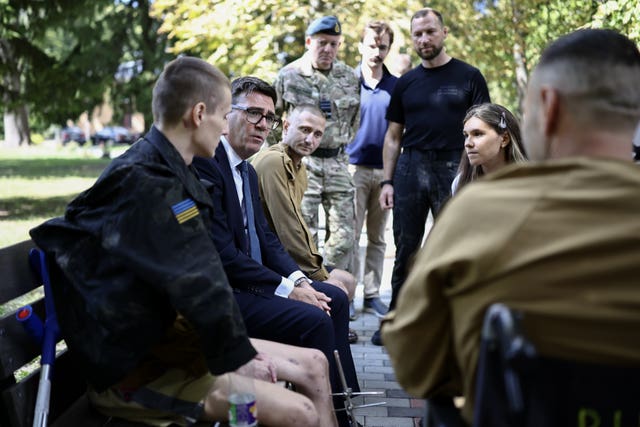
Meeting Mr Zelensky for a tete-a-tete and bilateral meeting, Mr Burnham said: “I felt I needed to come to show you and your people that there’s no change in Britain’s support.
“I wanted to leave no doubt about that at this particular moment in time.”
But the Prime Minister’s visit comes as Mr Zelensky faces domestic political strife caused by a rift with his former defence minister, Mykhailo Fedorov, who was sacked last month after reportedly falling out with the head of Ukraine’s armed forces.
Mr Fedorov, whose sacking triggered weeks of mass protests, has called for Mr Zelensky to hold elections, arguing democracy “should not be the hostage of Putin”.
He has also called for Mr Zelensky to face questions over what he knew about alleged corruption in his inner circle.
Last week, Ukraine’s anti-corruption authorities said they had uncovered a money-laundering plot, leading Mr Zelensky to sack one of his senior officials over their alleged involvement.
The president has denied any involvement, telling reporters over the weekend: “The heads of anti-corruption agencies have zero questions for me.
“They understand perfectly well that I am not involved in anything like that.”
Mr Burnham and Mr Zelensky have also signed an agreement to give the Ministry of Defence, working with selected British companies, access to Ukraine’s “Avengers” AI database, Downing Street said.
The deal is expected to help the UK learn from Ukraine’s experience on the battlefield and develop AI-powered solutions to national security challenges in both countries.
While the agreement is initially focused on defence and security, officials said the deal could “revolutionise all parts of public life, from air traffic control to train systems”.
The first trial of the new collaboration is expected to see AI sensors add an extra layer of protection for military bases, defending against protestors and hostile actors, while a second project will see the UK and Ukraine work together on low-power AI chips that could drive a new series of longer-lasting machines capable of functioning in tougher environments.


Share